
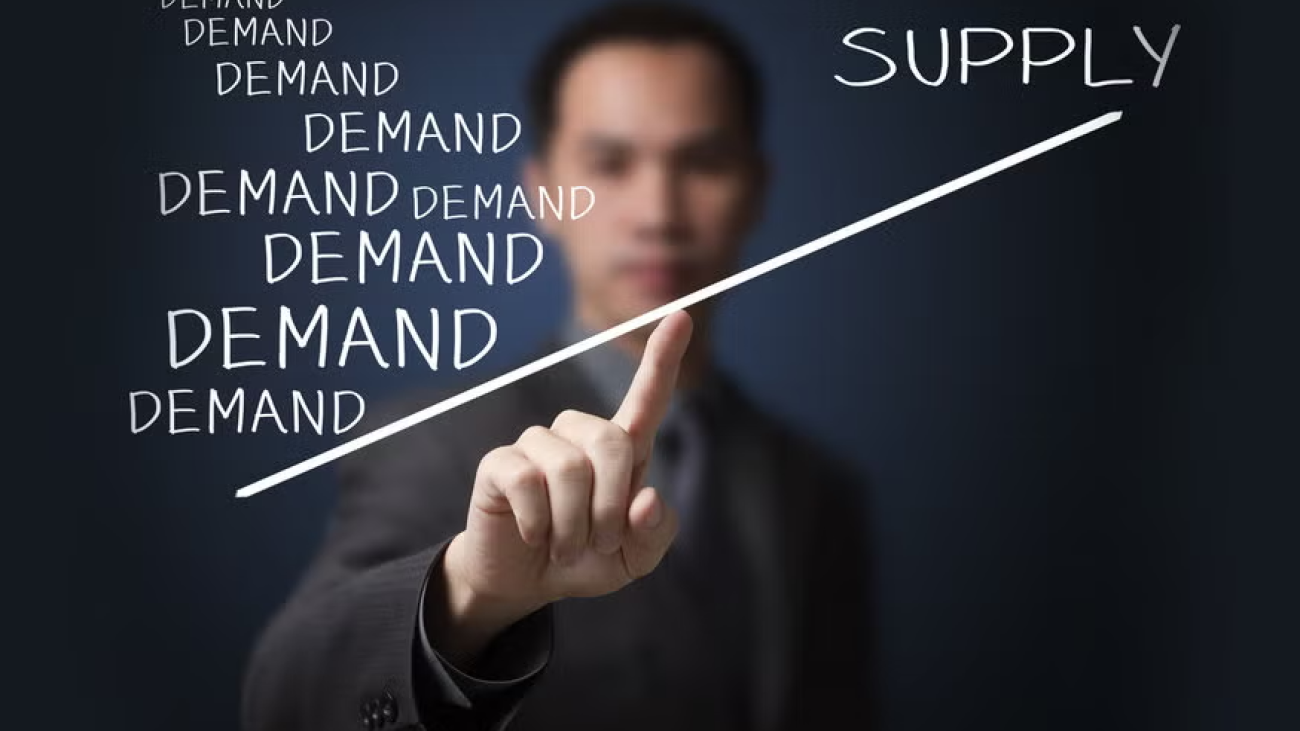
Supply and Demand Management in Supply Chain Management
(Comprehensive Understanding with Examples | OTP Framework Perspective)
Many supply chains struggle with:
- Excess inventory
- Stockouts
- High costs
- Poor service levels
But the real problem is:
Mismatch between supply and demand.
Because in business:
Profit is not created by supply or demand alone—
It is created by balancing both.
At Talent Consultancy, we emphasize a critical truth:
“Supply chain success depends on how well organizations align supply with demand.”
1. What is Supply and Demand Management?
Supply and Demand Management is the process of:
- Matching customer demand with supply capability
- Planning production, procurement, and distribution
- Balancing cost and service
Core Concept:
Demand → Planning → Supply → Delivery → Customer Satisfaction
2. Understanding Demand in Supply Chain
Demand Includes:
- Customer orders
- Market trends
- Seasonal variations
- Promotional demand
Example:
A retail company expects:
- Normal demand = 1,000 units
- Festival season demand = 2,000 units
Demand is variable
Key Insight:
Demand is uncertain and dynamic
3. Understanding Supply in Supply Chain
Supply Includes:
- Production capacity
- Supplier capability
- Inventory availability
- Transportation
Example:
Production capacity:
- Maximum = 1,200 units/day
Cannot meet sudden demand of 2,000 units
Key Insight:
Supply is constrained by resources
4. The Core Challenge: Supply-Demand Mismatch
1. Excess Supply (Overstock)
Example:
- Demand = 1,000
- Supply = 1,500
Excess = 500 units
Impact:
- High inventory cost
- Obsolescence risk
2. Shortage (Stockout)
Example:
- Demand = 1,500
- Supply = 1,000
Shortage = 500 units
Impact:
- Lost sales
- Customer dissatisfaction
Key Insight:
Mismatch creates cost and reduces service
5. Strategies for Supply and Demand Management (Detailed with Examples)
1. Demand Management (Controlling Demand)
What it Means:
- Influencing customer demand
Techniques:
- Pricing strategies
- Promotions
- Discounts
- Demand shaping
Example:
Low demand → Offer discount
Demand increases
Impact:
- Balanced demand
- Better capacity utilization
Key Insight:
Demand can be managed—not just predicted
2. Supply Management (Adjusting Supply)
What it Means:
- Aligning supply capacity
Techniques:
- Flexible production
- Supplier coordination
- Inventory buffers
Example:
High demand → Increase production shifts
Impact:
- Better responsiveness
- Reduced shortages
Key Insight:
Supply must be flexible to meet demand changes
3. Inventory Management (Balancing Supply & Demand)
What it Means:
- Holding optimal stock
Example:
Safety stock maintained:
- 200 units
Covers demand fluctuations
Impact:
- Reduced stockouts
- Controlled inventory cost
Key Insight:
Inventory is the buffer between supply and demand
4. Sales & Operations Planning (S&OP)
What it Means:
- Aligning sales, operations, and supply
Example:
Sales forecast:
- 10,000 units
Operations plan:
- Production adjusted accordingly
Impact:
- Better coordination
- Improved accuracy
Key Insight:
Integration improves alignment
5. Collaborative Planning
What it Means:
- Coordination with suppliers and customers
Example:
Retailer shares demand forecast with supplier
Supplier prepares production
Impact:
- Reduced uncertainty
- Improved service
Key Insight:
Collaboration reduces mismatch
6. Linking Supply & Demand Management to OTP Framework
OTP Framework
Operations → Visibility → Accountability → Control → Profit
7. Supply & Demand Management Through OTP Framework
1. Visibility (Understanding Demand & Supply)
Organizations must:
- Forecast demand
- Monitor supply capacity
Example:
- Demand forecast = 1,500 units
- Supply capacity = 1,200
Impact:
- Gap identified
OTP Link
Demand & Supply Data → Visibility → Clarity
2. Accountability (Ownership of Planning)
Organizations must:
- Assign demand planners
- Assign supply managers
Impact:
- Clear responsibility
OTP Link
Visibility → Accountability → Ownership
3. Control (Balancing Supply & Demand)
Organizations must:
- Adjust production
- Manage inventory
- Influence demand
Impact:
- Balanced operations
OTP Link
Accountability → Control → Alignment
4. Profit (Outcome of Balance)
When supply matches demand:
- Inventory cost reduces
- Sales increase
- Efficiency improves
- Profitability increases
8. Integrated Business Example
Situation:
Retail company facing stockouts and overstock
Without Supply-Demand Management:
- No forecasting
- No planning
Result:
- High cost + lost sales
With Effective Management (OTP):
Visibility
- Forecast demand
Accountability
- Assign planners
Control
- Adjust supply and inventory
Result:
- Balanced inventory
- Reduced cost
- Improved service
- Higher profit
9. Common Challenges
- Demand uncertainty
- Supply constraints
- Poor communication
- Lack of integration
10. Points to Remember in Business Operations
1. Demand is Uncertain
- Must be forecasted
2. Supply is Limited
- Must be managed
3. Balance is Critical
- Mismatch increases cost
4. Integration is Essential
- Coordination improves performance
5. Alignment Drives Profitability
- Balance improves results
11. Complete Performance Logic
Demand Management
- Supply Management
→ Alignment
→ Efficient Operations
→ Reduced Cost
→ Improved Service
→ Customer Satisfaction
→ Revenue
→ Profit
→ Business Performance
Final Strategic Thought
Many organizations focus separately on supply or demand, but true performance comes from aligning both. Supply-demand balance is the foundation of an efficient and profitable supply chain.
At Talent Consultancy, we emphasize that supply and demand must be integrated through visibility, accountability, and control to drive sustainable business performance.
Final Powerful Statement
“Demand creates opportunity, Supply delivers value. And business success happens when both are perfectly aligned.”