
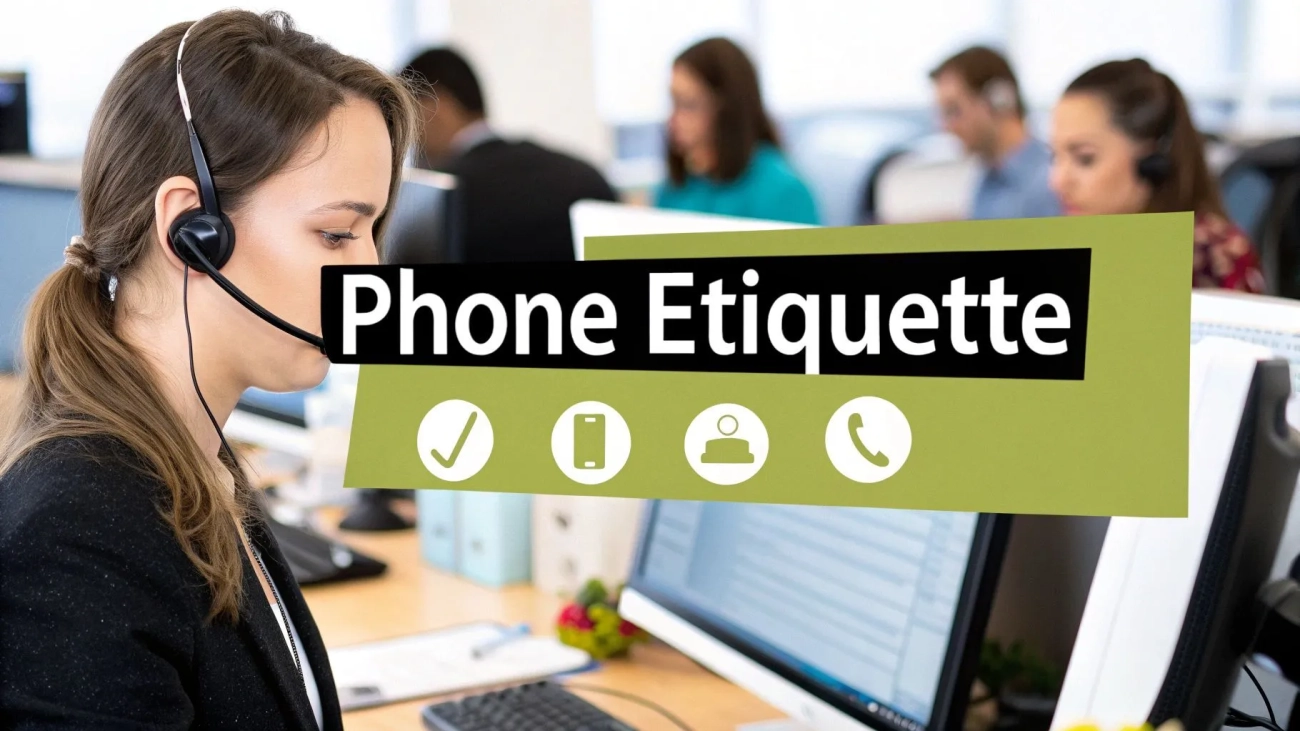
Telephone Etiquette
1. What is Telephone Etiquette?
Telephone etiquette is the professional way of answering, speaking, listening, and closing a phone conversation with customers.
Simple training definition:
Telephone etiquette is how we communicate professionally and politely with customers over the phone.
2. Importance of Telephone Etiquette
- First impression of the company
- Builds customer trust
- Shows professionalism
- Improves customer satisfaction
- Prevents misunderstandings
- Helps in problem solving
Very important statement:
On the phone, your voice is your image.
3. Standard Telephone Structure (Very Important)
You can teach this as a simple process:
1. Greeting
2. Introduction
3. Offering Help
4. Listening
5. Responding / Solving
6. Closing
4. Standard Telephone Example
“Good morning, ABC Company, this is Ahmed speaking. How may I assist you today?”
→ Greeting + Introduction + Offer help
5. Situational Examples
Situation 1 – General Enquiry
Customer:
“I want information about your training programs.”
Poor Response:
“Check website.”
Professional Response:
“Thank you for your enquiry. We offer several training programs. May I know which area you are interested in?”
Situation 2 – Putting Customer on Hold
Poor:
“Wait.”
Professional:
“May I place you on hold for a moment while I check that information?”
After returning:
“Thank you for holding.”
Situation 3 – Transferring Call
Professional:
“I will connect you to the relevant department. Please stay on the line.”
Situation 4 – Taking a Message
Professional:
“May I take a message, please?”
“Could you please provide your name and contact number?”
Situation 5 – Handling Complaint
Customer:
“Your service is very slow!”
Professional:
“I apologize for the inconvenience. I understand your concern. Let me check this for you immediately.”
Situation 6 – Wrong Number
Professional:
“I’m sorry, I believe you have reached the wrong department. Let me guide you to the correct number.”
Situation 7 – Closing the Call
Professional:
“Thank you for calling ABC Company. Have a great day.”
6. Functional Language (Very Important for Training)
Greeting
- Good morning / afternoon
- Thank you for calling
- Welcome to ABC Company
Offering Help
- How may I help you?
- How can I assist you today?
- What can I do for you?
Asking Questions
- May I know your name?
- Could you please explain the issue?
- Can you provide more details?
Putting on Hold
- May I place you on hold for a moment?
- Thank you for holding
Transferring Call
- I will transfer your call
- Please hold while I connect you
Clarifying
- Let me confirm that
- Just to clarify
- Let me check and get back to you
Apologizing
- I apologize for the inconvenience
- I’m sorry for the delay
- Sorry for the inconvenience caused
Closing
- Thank you for calling
- Have a nice day
- We appreciate your call
7. Professional Vocabulary
| Word | Meaning |
| Assist | Help |
| Enquiry | Asking for information |
| Clarify | Make clear |
| Confirm | Check and verify |
| Transfer | Connect to another person |
| Hold | Ask customer to wait |
| Resolve | Solve problem |
| Escalate | Send to higher authority |
| Follow up | Check later |
| Inform | Give information |
| Update | Give latest information |
| Request | Ask politely |
| Respond | Reply |
| Concern | Problem or issue |
| Feedback | Customer opinion |
8. Do’s and Don’ts of Telephone Etiquette
Do’s:
- Answer within 3 rings
- Smile while talking
- Speak clearly
- Use polite words
- Listen carefully
- Take notes
- Confirm information
- Be patient
- Thank customer
- Close professionally
Don’ts:
- Do not interrupt
- Do not argue
- Do not use rude tone
- Do not use slang
- Do not say “I don’t know”
- Do not keep customer waiting without information
- Do not eat or chew while talking
- Do not sound bored or angry
9. Tone of Voice (Very Important)
Tone should be:
- Friendly
- Calm
- Polite
- Confident
- Helpful
Bad tone:
- Angry
- Rude
- Bored
- Impatient
Important concept:
Customers cannot see you, but they can hear your attitude.
10. Points to Remember (Training Summary)
You can teach these key points:
- Answer calls within 3 rings
- Always greet and introduce yourself
- Speak clearly and politely
- Use customer name if possible
- Listen carefully
- Do not interrupt
- Use positive language
- Apologize when necessary
- Provide correct information
- Do not say “I don’t know”
- Ask before putting on hold
- Thank customer for waiting
- Take messages correctly
- Close call professionally
- Always thank the customer
Very Strong Training Statement
You can tell participants:
On the phone, customers cannot see your face.
They judge you only by your voice, tone, and words.
A professional phone call creates trust.
A poor phone call loses customers.
If you want, next I can prepare:
Using Polite Words in Telephone Conversations (Workplace)
This section is very useful for training because small word changes create big impact on customer experience.
1. Why Polite Words Are Important
Polite language helps to:
- Show respect
- Build trust
- Reduce customer anger
- Create positive experience
- Maintain professionalism
- Improve customer satisfaction
Very important training statement:
It’s not what you say, it’s how you say it.
2. Basic Polite Words to Use
Employees must regularly use:
- Please
- Thank you
- You’re welcome
- My pleasure
- Certainly
- Of course
- I apologize
- Kindly
- May I…
- Could you…
- Let me…
- I will…
3. Polite vs Impolite Language (Very Important)
| Impolite / Direct | Polite / Professional |
| Wait | Please hold for a moment |
| I don’t know | Let me check that for you |
| No | I’m afraid that may not be possible |
| Call later | Could you please call back later? |
| Send details | Could you please send the details? |
| Give me your name | May I have your name, please? |
| Wrong number | I believe you have reached the wrong department |
| Not my job | Let me connect you to the right person |
4. Functional Polite Language for Telephone Situations
Greeting
- “Good morning, thank you for calling ABC Company.”
- “Good afternoon, how may I assist you?”
Asking Information
- “May I have your name, please?”
- “Could you please provide more details?”
- “May I know the issue you are facing?”
Putting on Hold
- “May I place you on hold for a moment?”
- “Thank you for your patience.”
Transferring Call
- “I will connect you to the relevant department.”
- “Please hold while I transfer your call.”
Clarifying Information
- “Let me confirm that for you.”
- “Just to clarify your request…”
Apologizing
- “I apologize for the inconvenience.”
- “I’m very sorry for the delay.”
Offering Help
- “Let me assist you with that.”
- “I will check this for you immediately.”
Giving Information
- “Your order will be delivered tomorrow.”
- “The service will take approximately 15 minutes.”
Closing the Call
- “Thank you for calling.”
- “Have a great day.”
- “Please feel free to contact us again.”
5. Situational Examples
Situation 1 – Customer Asking Information
Customer:
“What are your working hours?”
Impolite:
“9 to 5.”
Polite:
“Our working hours are from 9 AM to 5 PM. Please let us know if you need any further assistance.”
Situation 2 – Customer Complaint
Customer:
“Your service is very slow!”
Impolite:
“It’s not slow.”
Polite:
“I apologize for the delay. I understand your concern. Let me check this for you immediately.”
Situation 3 – Putting on Hold
Impolite:
“Wait.”
Polite:
“May I place you on hold for a moment while I check the details?”
Situation 4 – You Don’t Know the Answer
Impolite:
“I don’t know.”
Polite:
“Let me check that information for you and get back to you shortly.”
Situation 5 – Transferring Call
Polite:
“I will transfer your call to the concerned department. Please stay on the line.”
Situation 6 – Ending the Call
Impolite:
“Okay, bye.”
Polite:
“Thank you for calling ABC Company. Have a wonderful day.”
6. Golden Rule in Telephone Communication
You can teach this:
Replace negative words with positive and polite expressions.
7. Tone + Words = Professional Communication
Even polite words must be used with:
- Friendly tone
- Calm voice
- Clear pronunciation
- Respectful attitude
Example:
Same sentence, different tone:
“Please wait.”
Rude tone → Sounds negative
Polite tone → Sounds professional
8. Points to Remember
You can give this as training summary:
- Always use polite words
- Avoid direct or rude language
- Use “please” and “thank you” frequently
- Do not say “I don’t know”
- Use positive language
- Apologize when necessary
- Speak clearly and calmly
- Use customer-friendly phrases
- Maintain professional tone
- End call politely
Words are powerful in customer service.
Polite words create respect.
Positive words create satisfaction.
Professional words create trust.
One wrong word can lose a customer.
One polite word can keep a customer forever.
Below are Telephone Role Plays + Professional Scripts
Telephone Etiquette Role Plays & Scripts
Role Play 1 – General Enquiry
Situation:
Customer calls to ask about services.
❌ Unimpressive Way:
Staff:
“Hello… what?”
Customer:
“I want information.”
Staff:
“Check website.”
✅ Impressive Way (Professional Script):
Staff:
“Good morning, ABC Company, this is Ahmed speaking. How may I assist you today?”
Customer:
“I want information about your training programs.”
Staff:
“Certainly. We offer a range of training programs. May I know which area you are interested in?”
Focus:
- Greeting
- Tone
- Asking questions
- Engagement
Role Play 2 – Putting Customer on Hold
Situation:
Staff needs time to check information.
❌ Unimpressive Way:
“Wait.”
(Customer annoyed)
✅ Impressive Way:
“May I place you on hold for a moment while I check the details?”
(After returning)
“Thank you for your patience.”
Focus:
- Permission
- Polite language
- Respect
Role Play 3 – Transferring a Call
Situation:
Customer needs another department.
❌ Unimpressive Way:
“Not my department. Call another number.”
✅ Impressive Way:
“I will connect you to the relevant department. Please stay on the line.”
“Thank you for holding. I’m transferring your call now.”
Focus:
- Ownership
- Professional language
- Smooth transition
Role Play 4 – Handling a Complaint
Situation:
Customer complains about late delivery.
Customer:
“My order is late!”
❌ Unimpressive Way:
“Delivery problem. Not my fault.”
✅ Impressive Way:
“I sincerely apologize for the delay. I understand how frustrating this must be. Let me check the status and update you immediately.”
Focus:
- Apology
- Empathy
- Action
Role Play 5 – Taking a Message
Situation:
Person is not available.
❌ Unimpressive Way:
“He is not here. Call later.”
✅ Impressive Way:
“I’m sorry, he is currently unavailable. May I take a message, please?”
“Could you please provide your name and contact number?”
Focus:
- Politeness
- Clarity
- Professional handling
Role Play 6 – Wrong Number
Situation:
Customer calls wrong department.
❌ Unimpressive Way:
“Wrong number.”
✅ Impressive Way:
“I believe you have reached the wrong department. Let me guide you to the correct contact number.”
Focus:
- Respect
- Helpfulness
Role Play 7 – Closing the Call
Situation:
Ending the conversation.
❌ Unimpressive Way:
“Okay bye.”
✅ Impressive Way:
“Is there anything else I can assist you with?”
“Thank you for calling ABC Company. Have a wonderful day.”
Focus:
- Professional closing
- Customer care
Role Play 8 – Customer Asking for Discount
Situation:
Customer requests a discount.
Customer:
“Can you give me a discount?”
❌ Unimpressive Way:
“No.”
✅ Impressive Way:
“Thank you for your interest. At the moment, we have a fixed pricing policy. However, we do have special offers during certain periods. I can inform you when they are available.”
Focus:
- Saying “No” politely
- Maintaining relationship
Role Play 9 – Busy Line / Delay
Situation:
Customer complains about delay.
Customer:
“I’ve been waiting too long!”
❌ Unimpressive Way:
“Busy.”
✅ Impressive Way:
“I sincerely apologize for the delay and thank you for your patience. We are currently experiencing high call volume. How may I assist you now?”
Focus:
- Apology
- Appreciation
- Professional tone
Role Play 10 – Follow-Up Call
Situation:
Staff calls customer after service.
✅ Professional Script:
“Good afternoon, this is Ahmed from ABC Company. I’m calling to check if the issue we resolved yesterday is working fine now.”
Focus:
- Customer care
- Relationship building
Key Learning Points
- First impression is created in first 5 seconds
- Tone of voice is very important
- Use polite and positive language
- Always listen carefully
- Never argue
- Apologize when needed
- Provide solutions
- Take ownership
- Close calls professionally
- Every call represents the company
Every phone call is an opportunity.
A poor call loses a customer. A professional call builds trust.
You are not just answering a call. You are representing the company.